
Ontario winters are unforgiving. With temperatures regularly dropping below freezing, heavy snowfall, and icy roads, your winter tires are your first line of defense against dangerous driving conditions. However, even the best winter tires don't last forever. Knowing when to replace them could mean the difference between arriving safely and being involved in a collision.
by Ultimate Drivers | 30 December 2025
Essential Safety Guide for Ontario Drivers
Winter Tire Safety: Know When to Replace
Ontario winters are unforgiving. With temperatures regularly
dropping below freezing, heavy snowfall, and icy roads, your winter tires are
your first line of defense against dangerous driving conditions. However, even
the best winter tires don't last forever. Knowing when to replace them could
mean the difference between arriving safely and being involved in a collision.
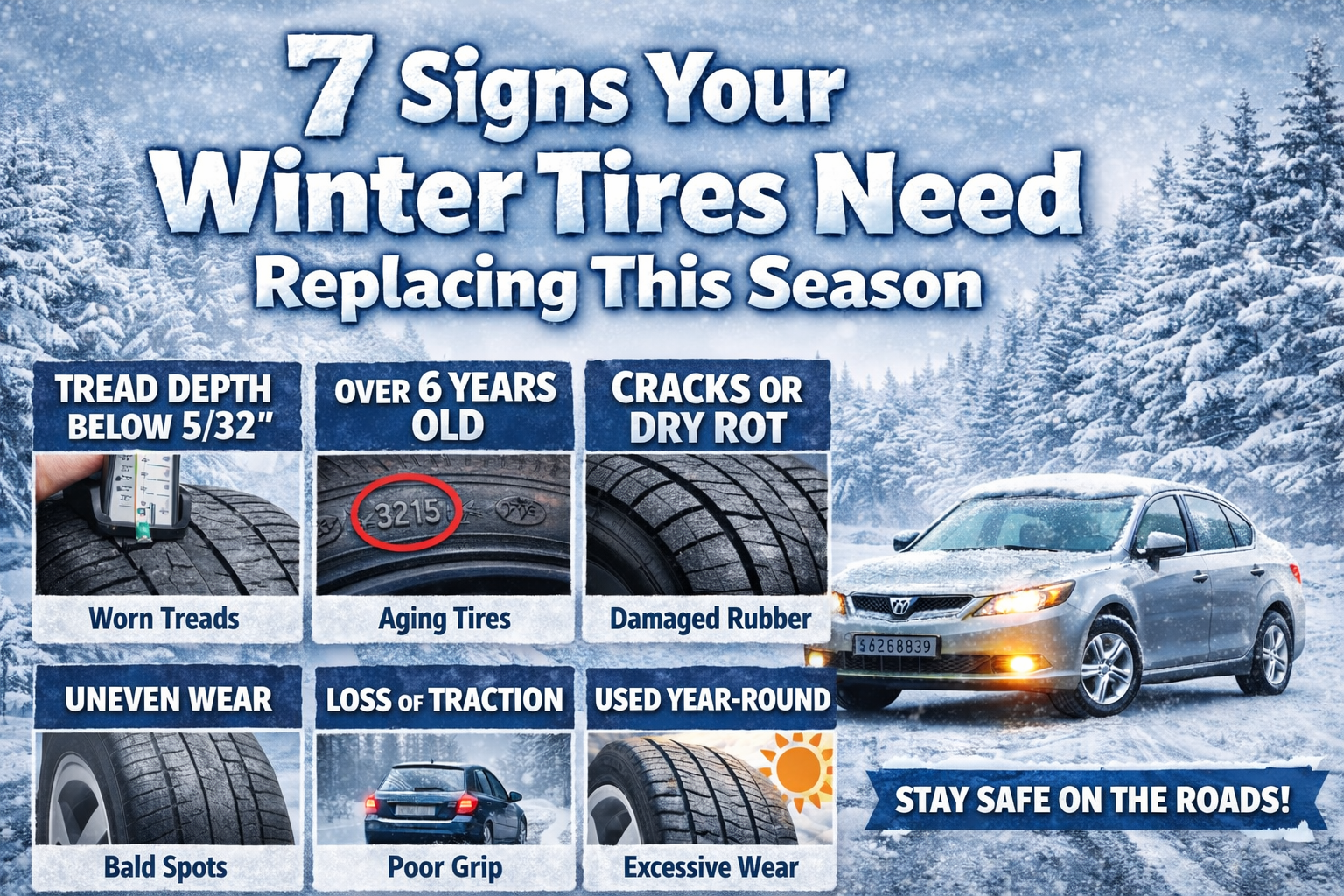
1) Tread Depth Below 4/32 of an Inch
The most critical indicator that your winter tires need
replacement is insufficient tread depth. While the legal minimum in Ontario is
1.5mm (approximately 2/32 of an inch), winter tires lose their effectiveness
well before reaching this point.
What to look for: Winter tires should have at
least 4/32 of an inch (approximately 3.2mm) of tread depth to maintain proper
traction in snow and ice. You can check this using the simple quarter test:
insert a quarter into the tread with the caribou's nose facing down. If you can
see the tip of the nose, your tires have less than 4/32 inch of tread remaining
and should be replaced.
Many winter tyres also feature built-in tread wear indicators that become visible as the tyre wears down, making it easier to determine when replacement is necessary.
2) Visible Cracks in the Sidewall or Tread
Ontario's freeze-thaw cycles can be particularly harsh on
tire rubber. Over time, you may notice cracks appearing in the sidewall or
within the tread itself. These cracks, also known as weather checking or dry
rot, indicate that the rubber compound has degraded and lost its flexibility.
Why it matters: Cracked tires are more
susceptible to blowouts, especially when driving at highway speeds or over
potholes, which are common on Ontario roads during winter. Even if the tread
depth seems adequate, visible cracking is a clear sign that the structural
integrity of the tire has been compromised.
Inspect your tires regularly by looking closely at both the
outer sidewalls and the areas between the tread blocks for any signs of
cracking or deterioration.
3) Age of the Tires Exceeds Six Years
Even if your winter tires appear to have adequate tread and
show no visible damage, age alone can be a determining factor in whether they
need replacement. Tire manufacturers generally recommend replacing tires that
are six to ten years old, regardless of their appearance.
How to check tire age: Look for the DOT code on
the sidewall of your tire. The last four digits indicate the week and year of
manufacture. For example, "2318" means the tire was manufactured in
the 23rd week of 2018, making it over six years old.
Older tyres may appear fine, but they often have hardened rubber that fails to grip the road effectively in winter conditions. The specialized rubber
compounds in winter tires are designed to remain flexible in cold temperatures,
but this flexibility diminishes over time.
⚠️ Ontario Winter Tire
Regulations
While Ontario doesn't legally require winter tires, many
insurance companies offer discounts for using them between December 1 and March
31. More importantly, winter tires significantly improve your safety on
snow-covered and icy roads, reducing stopping distances by up to 25% compared
to all-season tires in cold conditions.
4) Uneven Wear Patterns
Uneven tire wear is not only a sign that your tires may need
replacement, but also an indication of other vehicle issues such as improper
alignment, unbalanced wheels, or suspension problems.
Common wear patterns to watch for:
• Centre wear: Indicates over-inflation
• Edge wear: Suggests under-inflation
• One-sided wear: Points to alignment
issues
• Cupping or scalloping: May indicate
suspension or balance problems
If you notice uneven wear, have your vehicle inspected by a
qualified technician. Even if you replace the tires, the underlying issue needs
to be addressed to prevent premature wear on your new set.
5) Loss of Traction and Increased Stopping
Distance
If you notice that your vehicle is slipping more frequently
on snowy or icy roads, taking longer to stop, or struggling to accelerate from
a standstill, your winter tires may be worn out.
Performance indicators: Worn winter tires lose
the aggressive tread patterns and siping (small slits in the tread blocks) that
channel away water and snow, providing grip. You might experience more frequent
instances of your traction control or ABS engaging, or notice the rear end of
your vehicle sliding during turns.
Don't wait until you're involved in a near-miss or
collision. If your vehicle's winter performance has noticeably declined
compared to previous seasons, it's time to have your tires inspected and likely
replaced.
6) Bulges, Blisters, or Deformities
Any visible bulges, blisters, or unusual deformities on the
tire surface are serious warning signs that demand immediate attention. These
defects typically indicate internal damage to the tire's structure, often
caused by impacts with potholes, curbs, or road debris.
The danger: A bulge represents a weak spot where
the tire's internal structure has failed. This area is at high risk of sudden
failure, potentially leading to a dangerous blowout while driving. Ontario's
pothole-riddled winter roads make this a particular concern during the colder
months.
If you spot any bulges or deformities, replace that tire
immediately. Do not wait, as this is a safety hazard that could lead to loss of
vehicle control.
7) Frequent Need for Inflation or Slow Leaks
While it's normal for tire pressure to drop slightly in cold
weather (tires typically lose 1-2 PSI for every 10°F decrease in temperature),
frequently needing to add air to your tires suggests a problem.
What causes slow leaks: Small punctures from
nails or screws, valve stem damage, or deterioration of the tire bead seal can
all cause slow air loss. In some cases, these issues can be repaired, but
chronic leaking may indicate that the tire has sustained damage that makes
replacement the safer option.
Keep in mind that underinflated tires wear out faster,
reduce fuel efficiency, and don't perform well in winter conditions. If repairs
don't solve the problem or if the tire has multiple punctures, replacement is
necessary.
💡 Maintenance Tip:
Regular Inspections
Make it a habit to visually inspect your winter tires at
least once a month during the season. Check for proper inflation using a
quality tire pressure gauge, examine the tread depth, and look for any signs of
damage. Catching problems early can prevent more serious issues down the road
and help you plan for tire replacement before you're caught in an emergency.
Conclusion: Safety First on Ontario Roads
Winter tires are a significant investment in your safety and
the safety of others on Ontario's roads. While it may be tempting to squeeze
one more season out of aging or worn tires, the risks simply aren't worth it.
Reduced traction, longer stopping distances, and increased likelihood of tire
failure can turn a routine winter commute into a dangerous situation.
If you've noticed any of these seven signs in your winter
tires, it's time to schedule a professional inspection or consider replacement.
Remember that all four winter tires should be replaced at the same time to
maintain balanced handling and optimal performance.
Driving safely through an Ontario winter requires
preparation, caution, and the right equipment. Don't let worn-out winter tires
compromise your safety this season. When in doubt, consult with a trusted tire
professional who can assess your tires and provide expert recommendations based
on your specific driving needs and conditions.
Stay safe out there, and drive prepared!
Latest Blog

Is Advanced Driver Training Worth the Investment?
by Ultimate Drivers | 26 September 2026
Passing your road test and getting a licence proves you can drive. It doesn't prove you can handle the moments that actually put drivers at risk — a tire that drifts onto a gravel shoulder, a vehicle suddenly coming at you head-on, or a patch of black ice that turns a normal stop into a skid. That's the gap advanced driver training is designed to close, and it's why newer (and experienced) drivers are asking whether it's worth the extra time and cost. Here's an honest look at the value, and how Ultimate Drivers built a program specifically to deliver it.

 Buy Gift Card
 Review


